
Powder Coating vs Galvanized Wire in Humid Climates
In a humid climate, powder coated wire usually lasts longer than plain galvanized wire, provided the coating is complete and undamaged. Galvanized wire can still be the better choice for a cage that will be scratched, chewed or stored where it cannot be kept dry, because the zinc layer keeps protecting the steel underneath even when the surface is broken.
Both finishes start from the same base, which is metal wire, with steel tube used in the frame of some models. The difference is how each finish keeps water and oxygen away from that steel. Powder coating forms a continuous skin over the wire. Galvanizing adds a layer of zinc that reacts first, so the steel underneath is protected even when the outer surface is damaged. In humid air, water does not only sit on the top of a cage. It collects in joints, under a tray, around a door hinge and on the underside of a roof, and those are the places where a finish usually fails first. Neither finish lasts forever, and the right choice depends on where the cage will be used, how it will be handled and how it will be stored before it reaches the end customer.
How powder coating protects and where it fails
Powder coating starts as a dry powder that is sprayed onto clean metal and then baked until it melts into a smooth and even layer. When it is applied well, it seals the wire, covers the welds if it is applied after welding, and gives a clean color and a smooth touch that is easy to wipe. In a humid indoor room, that sealed surface keeps moisture away from the steel, so rust starts slowly and the cage keeps its color and shape for a long time. For a buyer who sells to pet owners who keep a cage indoors and clean it with a damp cloth, that sealed surface is often the most practical choice.
The weakness of powder coating is that it depends on the layer staying complete. A chip from a beak, a scratch from a tray, a knock during transport or a sharp edge at a weld can break the skin and let water reach the steel underneath. Once water gets under the edge, rust can spread under the coating while the surface still looks fine from the outside. The first sign is often a small blister or a bubble in the coating, and by the time the coating peels, the rust underneath has already grown. A touch up with ordinary paint does not match a baked layer, and it does not seal the edge in the same way, so a damaged powder coated cage is hard to repair in a shop or in a home. The buyer should also look at bends and corners, because the coating can be thinner where the wire turns, and at the door frame and the latch, because those parts are touched every day and are the first to show wear.
How galvanized wire protects and where it fails
Galvanized wire is steel wire covered with a layer of zinc. The zinc is there to corrode first, so a small scratch does not leave bare steel open to rust in the same way. When the zinc is scratched, it still protects the steel around the scratch, and that self protecting effect is the main reason galvanized wire is used for outdoor cages, aviaries and utility products. It tolerates rough handling, stacking and repeated cleaning better than a painted surface, and it does not peel in large sheets when it is damaged.
The weakness of galvanized wire is that the zinc itself corrodes in humid air. In a damp room, the surface can turn dull and gray and develop a white powdery deposit, which is a sign that the zinc is being used up. In coastal air or in a room with salt in the air, that process is faster. Bird waste and spilled water can also make the surface corrode faster if the cage is not cleaned and dried, because the waste stays in joints and under a tray. Welds are a weak point as well, because the heat of welding can burn the zinc off the joint and leave a bare spot unless the weld area is treated again after welding. The coating can also be uneven, with thin spots on the underside of a wire or inside a corner that are hard to see. In appearance, galvanized wire looks industrial and gray, which some buyers see as less premium than a smooth color finish, but for a cage that will be used outdoors or handled often, that plain look is the trade off for a finish that keeps working after a scratch.
How to judge a sample for a humid market
Do not judge a finish from a photo or from a color name alone. Take the sample into good light and look at the welds first, then at the edges, the corners, the door frame, the hinges, the latch and the rails under the tray. Run a finger carefully along the inside of the joints to feel for rough spots, bare metal or thin coating, and look at the underside of the cage as well as the top, because moisture collects underneath. Check for chips, bubbles, peeling and white spots, and check where the wire meets the frame, because that joint is where water sits and where a coating is most likely to be thin. If the sample uses steel tube in the frame, look at the open ends of the tube and ask how they are sealed, because an open end can trap water inside.
Ask the supplier to state the finish on the drawing, not only as a color, and ask whether the coating was applied before or after welding. If it was applied before welding, ask how the weld areas were treated after welding, because those areas are the most likely to rust first in humid air. Ask how the cage should be stored in your warehouse, and how the end customer should clean and dry it, because a cage that is stored on a damp floor or packed while still wet will start to corrode before it is sold. Handle the sample as a customer would for a few days, open and close the doors, slide the tray in and out, lift the cage by the top, and then look again for new chips or white marks. A finish that still looks even after that handling is a better sign than a finish that looks perfect only when it is new and untouched.
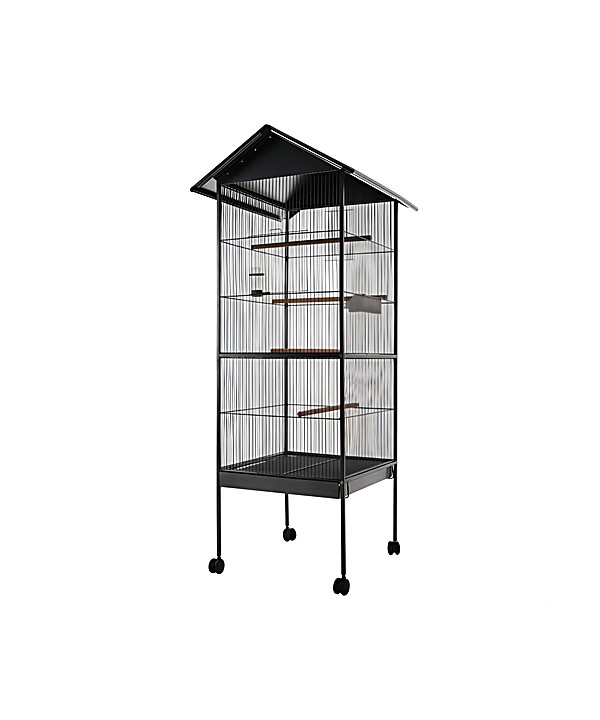
A traditional outdoor bird cage like KY-P0025 shows why this choice matters, because its pointed roof and outdoor use put it in rain, morning dew and humid air for much of its life. For that kind of cage, the buyer should confirm the finish, the weld coverage and the storage advice together, and approve the sample only when the coating is even at the joints and the roof. We build to the drawing, with MOQ 500 pcs and a lead time of 35 days, and a change of finish counts as a specification change. That single check, done before production, prevents most of the problems that appear later as rust at the welds, peeling paint and returns.
Related products
Sourcing pet cages for your market? Send us the model and quantity — we reply within one working day.
Request a Quote