
What MOQ 500 really means for a custom pet cage
MOQ 500 pcs means 500 pieces of one exact specification, not 500 pieces spread across different colors, sizes and designs. If you change the color, the size or the parts, you have created a new specification, and that new specification needs its own 500 pieces.
A minimum order quantity is not a sales target. It is the smallest run that makes sense to set up, make and pack in one go. For a metal wire cage, that setup includes cutting the wire to length, setting the welding jig, running the coating line and preparing the packaging. Each time the specification changes, that setup has to be done again, even if the change looks small on paper. That is why a factory counts MOQ by specification, not by the total number of cages in your order, and why a buyer who splits an order across many variants can meet the total and still miss the MOQ for each variant.
One specification counts as one order not many
A specification is the full list of details that define one cage. It includes the model, the interior and exterior size, the wire diameter, the bar spacing, the frame material, the finish and the color, the tray type, the door type and the packaging. If any one of those details changes, the cage that comes off the line is a different product to make, even if it looks similar to the one beside it. A black cage and a white cage of the same model are two specifications. A small cage and a large cage of the same design are two specifications. A cage with a plastic tray and the same cage with a metal tray are two specifications if the tray changes the material, the fitting or the assembly.
This is the point that causes the most confusion for a first time buyer. An order for 500 pieces in total, made up of 100 pieces in five colors, is not an order for 500 pieces. It is five orders for 100 pieces, and none of them meets the MOQ. The same is true for size. An order for 250 small cages and 250 large cages is two orders for 250 pieces, not one order for 500 pieces. Before you ask for a price, write down your specification in full, and ask the supplier to confirm in writing which changes count as a new specification. This depends on the specification and needs confirmation against the drawing, because a change that looks minor to a buyer can mean a new jig, a new coating batch or a new packing step in the factory.
How color size and parts change the count
Color is often the first change a buyer wants to make, and it is also the change that most often creates a new MOQ. Powder coating is run in batches by color, so a change of color means cleaning the line, preparing a new batch and running the line again. A cage in black and the same cage in white cannot be made in one coating run, so they cannot share one MOQ. If you want two colors in your first order, plan for 500 pieces of each color, or choose one color for the first order and add the second color after the first order has sold through.
Size works in the same way. A change of length, width or height changes the wire lengths, the frame size, the jig and the carton size, so it is a new specification even when the design and the color stay the same. Parts work in a similar way. A change of tray, a change of door, the addition of feed bowls, the addition of wheels or the addition of a divider can change the material list and the assembly steps, and the supplier will need to confirm whether that change creates a new specification. A logo is a special case. A printed logo does not change the cage structure, but it does change the printing step, so ask the supplier whether a logo alone creates a new specification, and get that answer in writing before you place the order.
The practical way to keep an order simple is to keep the number of variables low. Choose one color that sells in your market, choose one size that fits the most common breed in your market, and keep the parts standard for the first order. You can add a second color, a second size or a special part later, once you know which variant sells, but adding them all to the first order will multiply the MOQ and the stock you have to hold. A custom cage does not have to mean a custom cage in every detail at once. It can mean one standard cage with one clear change that your market actually wants.
How to plan 500 pieces for your first order
Start by choosing the variant you can sell, not the variant you like best. Look at which size and which color already sell in your market, look at which breed is most common among your customers, and look at how much space you have in your warehouse and on your shop shelf. A cage that fits your best selling breed, in a color that matches your other stock, will move faster than a cage in a rare size or a rare color, even if the rare one looks more interesting in a photo. Write down how many pieces you expect to sell in a season, and compare that number with 500 before you place the order. If the number is much smaller than 500, choose a broader variant that more customers can use, or plan for a longer selling period, rather than splitting the order into small variants that do not meet the MOQ.
Then check the sample against the drawing before production starts. Measure the interior length, width and height with a tape measure, check the wire diameter and the bar spacing with a caliper, check the welds in good light, open and close the doors several times, and slide the tray in and out. Check the color and the finish as well, because a color that looks right in a photo can look different on a real cage. If the sample does not match the drawing, raise it now, because a change after production starts will cost time and will need a new confirmation. A sample that matches the drawing is the only safe basis for a production run of 500 pieces.
Plan the timing as well. A change to the specification after the sample is approved can delay production, because the factory has to set up again for the new specification. Keep the specification stable once the sample is approved, and allow time for production and for shipping to your warehouse. If you need the cages for a particular season, place the order early enough that the production time and the shipping time both fit inside your plan, and do not change the color or the size at the last minute.
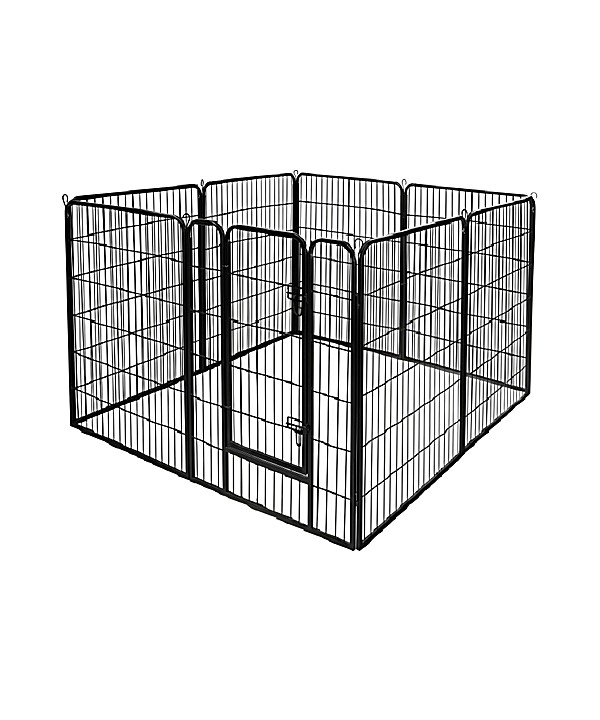
A modular eight panel metal pet playpen like KY-P0048 shows why this matters in practice, because its panels can form a square, a hexagon, an L shape or a straight fence, and each shape uses the same panels in a different layout. For that kind of product, the buyer should confirm the panel count, the door position and the finish together, and approve the sample only when all three match the drawing. We build to the drawing, with MOQ 500 pcs and a lead time of 35 days, and a change to the specification counts as a new order for MOQ purposes.
Related products
Sourcing pet cages for your market? Send us the model and quantity — we reply within one working day.
Request a Quote