
How to pick bar spacing for a bird cage
Most buyers choose a bird cage by its height and its floor size, and they only notice the bar spacing when something goes wrong. A gap that looks fine in a photo can be wide enough for a small bird to push its head through, and a gap that looks safe can be so tight that the bird cannot climb and fresh air moves slowly through the cage. Spacing is not a detail to leave to the factory. It is a safety specification, and it should be decided before the order is placed, written on the drawing, and checked again on the sample.
Bar spacing decides three things at once. The first is safety. A bird that can fit its head through a gap can get stuck and injure its neck, and a bird that can squeeze its whole body through will escape. The second is movement. Birds climb by gripping the bars with beak and feet, so the gap has to suit the size of the feet and the strength of the grip. The third is daily life inside the cage. Wide gaps give a clear view and good airflow, while narrow gaps give more bars to climb but less light and less air. A good cage balances all three, and the balance point is different for every species.
The most useful rule is simple. The gap must be smaller than the smallest part of the bird that could pass through it, which in practice means smaller than the head. If the head can pass, the body will follow, or the bird will get stuck halfway. Measure the head, not the body, and remember that young birds are smaller than adults of the same species, so a cage bought for a young bird must fit the bird as it is now. A second rule is that spacing is set by the bird, not by the cage. Two cages of the same size can need different spacing if they are made for different birds.
Match the gap to the bird not to the cage
Small birds need the narrowest gaps. Budgies, finches and canaries usually need a gap of about 10 to 12 millimetres. At this size the bars are close enough that a small head cannot pass, and the bird can still climb easily because its feet are small and its grip is light. A gap of 15 millimetres already risks a budgie getting its head through, and a gap of 19 millimetres is wide enough for a small bird to escape completely. Many cheap cages fail here, because the factory used one spacing for every size of cage and the small cage inherited a gap meant for a larger bird.
Medium birds sit in the middle of the range. Cockatiels, conures and lovebirds usually need a gap of about 15 to 19 millimetres. A cockatiel is larger than a budgie but still light, and it climbs a lot, so the bars must be close enough to grip and far enough apart to let the bird move without catching a toe. At 19 millimetres a conure is still safe in most cases, but a small conure or a young bird may need the lower end of the range. When a buyer is unsure between two values, the narrower one is usually the safer choice, because a gap that is slightly tight is an inconvenience while a gap that is slightly wide is a danger.
Large birds need wider gaps, but the gap still has a limit. African greys, Amazons and similar parrots usually need a gap of about 19 to 25 millimetres. Their heads are larger and their beaks are stronger, so they need thicker wire as well as wider spacing, because a strong beak can bend thin wire and open a gap that was correct on the drawing. Macaws and cockatoos are at the top of the range, at about 25 millimetres. A gap wider than 25 millimetres is rarely right for any pet bird, even a large one.
Check spacing the same way on every panel
Spacing on a drawing is one number, but spacing on a real cage is many numbers. The gap can change from panel to panel, because the door frame, the corners and the tray rails take up space and push the bars apart or pull them together. A cage that measures 15 millimetres on the front panel can measure 19 millimetres beside the door, and that one wide spot is enough for a bird to get stuck. A buyer who only measures the middle of one panel will miss it. Measure every panel, at the top, in the middle and at the bottom, and beside the door and beside the tray.
Use a ruler or a caliper, not an estimate by eye. Place the tool flat against the bars and read the clear distance between two bars, not the distance from the centre of one bar to the centre of the next. Write down each reading, and compare the largest reading with the limit for the species, not the average. The average can hide a wide spot, and the bird will find the wide spot.
Pay special attention to the places where bars meet a frame. At a corner the last bar may sit further from the frame than the other gaps, and that corner gap is a common escape point. At a door the bars beside the hinge and beside the latch can spread when the door is opened and closed many times, so check the gaps with the door closed and latched, not hanging open. At the tray the bars above the tray rails can be bent slightly by the tray sliding in and out, so check there too.
The sample check should cover all of this in one pass. Ask the supplier to mark the spacing on the drawing for each panel, then measure the sample panel by panel against those numbers. If a panel is out of tolerance, the whole cage is out of tolerance. A sample that passes on the front and fails at the door is a failed sample, and approving it means every cage in the order will carry the same wide spot.
Ask for spacing on the drawing before production
Spacing should be written on the drawing as a number with a tolerance, for example 15 millimetres with a tolerance of plus or minus 1 millimetre, and the tolerance should be the same for every panel. If the drawing only says the cage size and the wire diameter, the factory can choose any spacing it likes, and the buyer will have no document to point to when the sample arrives with gaps that are too wide. Put the spacing beside the wire diameter on the drawing, and ask the supplier to confirm the numbers in writing before production starts.
Changing spacing after production has started is expensive, because spacing decides how many bars the cage needs, and the number of bars decides the weight, the amount of wire, the number of welds and the time on the welding line. Narrower spacing means more bars, more welds and a heavier cage, which changes the cost and the shipping weight. This is why spacing should be settled at the drawing stage, not discovered at the sample stage, and why a change to spacing counts as a specification change that should be confirmed and priced before the order goes ahead.
A buyer who orders for a market should also think about the range. A shop that sells to owners of small birds and large birds needs more than one spacing, and the range should be planned so that each cage has one clear species group on its label. A cage with no species on the label will be bought for the wrong bird sooner or later, and most spacing returns come from a cage that was bought for the wrong species, not from a cage that was made wrong.
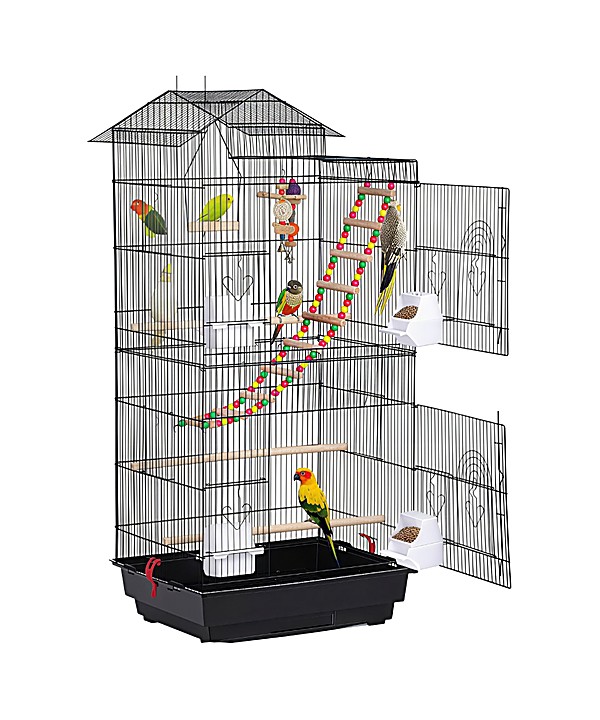
A three tier bird cage like KY-P0005 shows why spacing deserves its own line on the drawing, because a tall cage has more panels, more doors and more places where a gap can drift, and a buyer should confirm the spacing on every tier, at every door and at the tray before approving the sample. We build to the drawing, with MOQ 500 pcs and a lead time of 35 days, and a change to the bar spacing counts as a specification change.
Related products
Sourcing pet cages for your market? Send us the model and quantity — we reply within one working day.
Request a Quote